Tag: ItalianBaroque
-
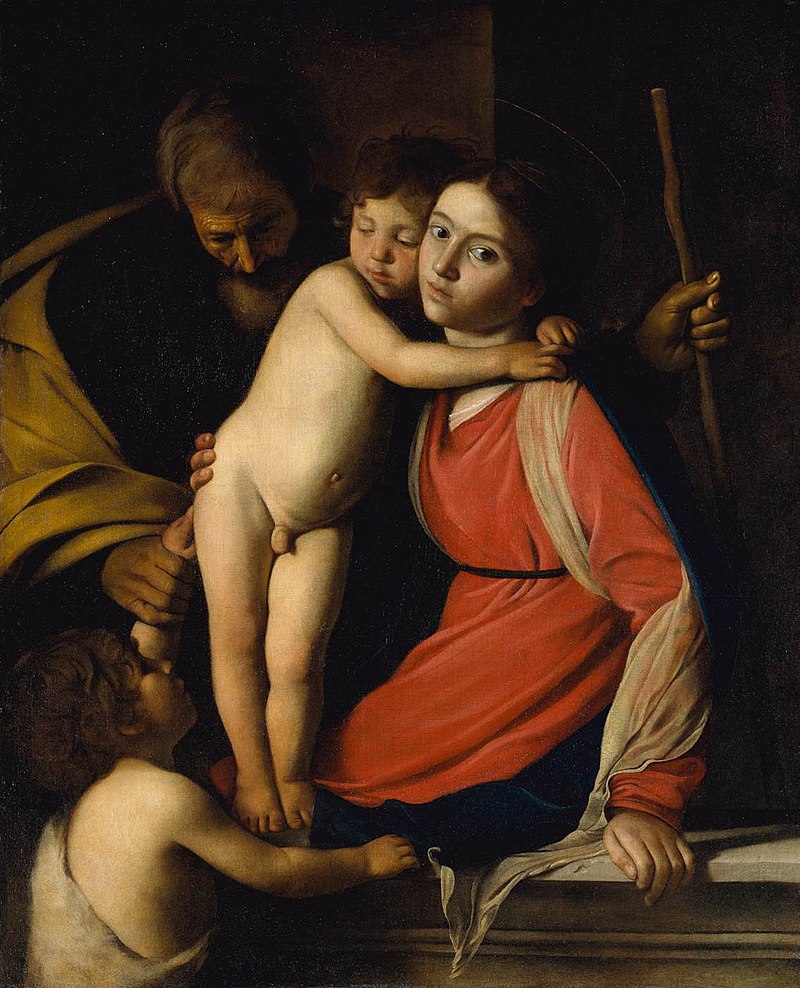
The Holy Family with the Infant St. John the Baptist
The Holy Family with the Infant St. John the Baptist (c.1600) Caravaggio. The attribution to Caravaggio is not universally agreed upon by Caravaggio scholars. However, The Met attributes it to Caravaggio and I’m not in a position to argue. It is disappointing that there is very little written about the piece on the Met’s website…
-
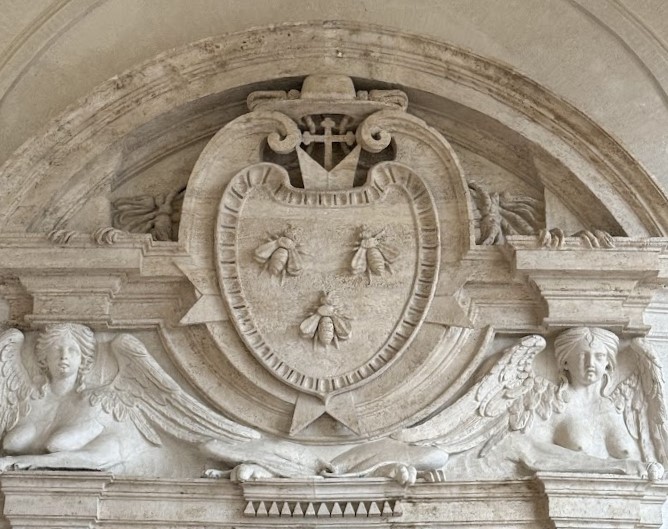
The Galleria Nazionale d’Arte Antica at Palazzo Barberini
Overview The Galleria Nazionale d’Arte Antica at Palazzo Barberini in Rome is a treasure trove of art from the 13th to the 18th centuries. Housed in a stunning Baroque palace designed by Carlo Maderno, Gian Lorenzo Bernini, and Francesco Borromini, the gallery showcases masterpieces by artists like Caravaggio, Raphael, and Titian. Originally the Barberini family’s…
-
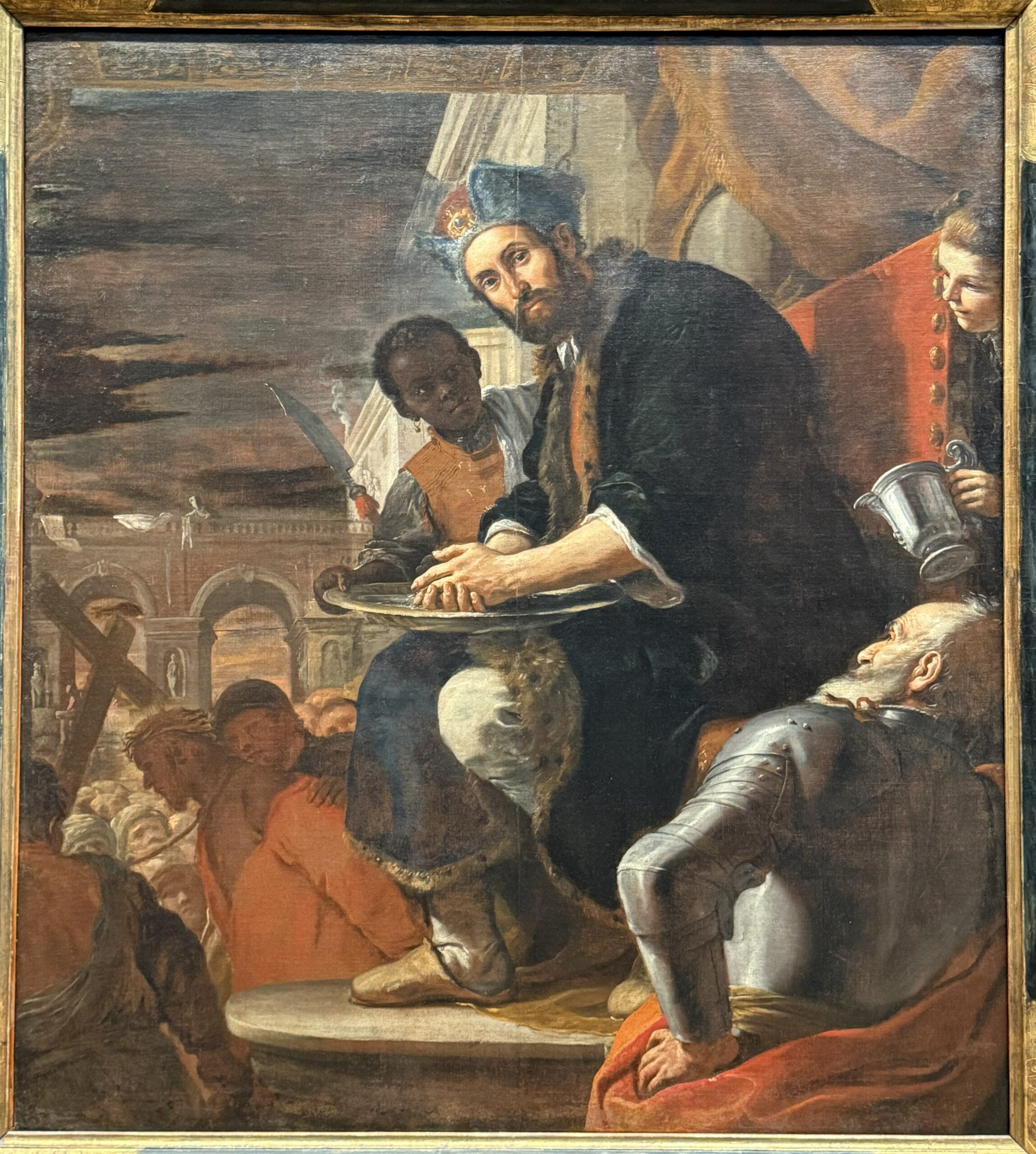
Pilot Washing his Hands
Pilot Washing his Hands (1643) Mattia Preti. Here we encounter Pilate, who is looking directly at us, washing his hands as Jesus is being led away in the background. Pilate knows Jesus is innocent and he attempted to get the crowd to release Jesus, but they did not. He is washing is hands to show…
-

Death of Cleopatra
Death of Cleopatra (c.1645) Guido Cagnacci. This theatrical and erotic depiction of Cleopatra’s suicide is on brand for the Northern Italian painter. It is easy to envision this painting taking place on a stage where the heroine is so distraught from the defeat of Mark Antony that she feels her only course of action is…
-

Christ on the Cross
Christ on the Cross (c.1615) by Cecco del Caravaggio (Francesco Buoneri) We recently visited the Met in New York City for the first time, where this powerful piece is on display. It’s housed in a glass case that allows you to view both sides, though I wasn’t able to capture a good photo due to…
-
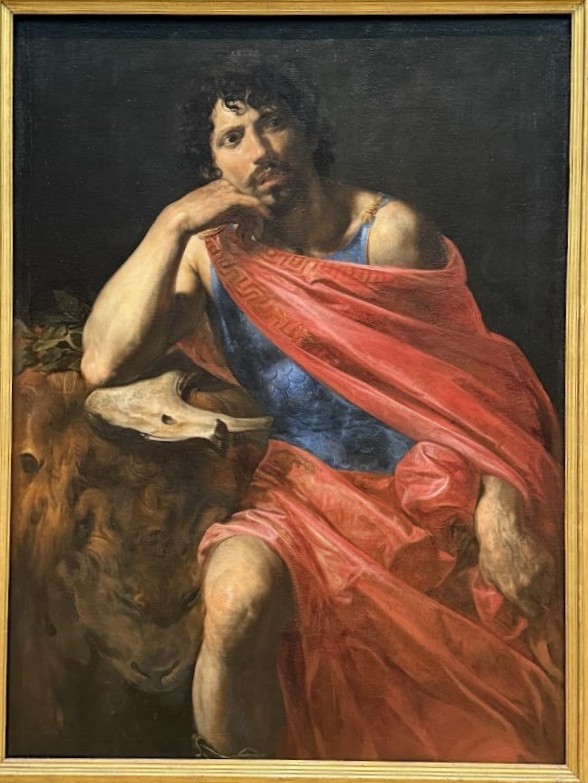
Samson
Samson by Valentin de Boulogne presents a contemplative vision of the biblical strongman. Samson gazes beyond the viewer, as if reflecting on the chain of violent and tragic events that have just unfolded. He may have only recently wielded the jawbone of a donkey to kill 1,000 Philistines—a moment of brutal triumph that was also…
-
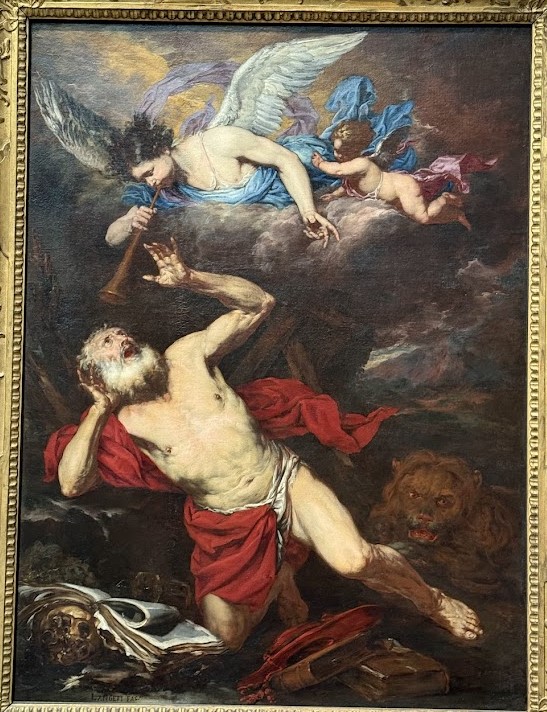
The Vision of St. Jerome
The Vision of St. Jerome (1660) Giovanni Battista Langetti. Langetti is a lesser-known Baroque artist, he worked in Venice and his use of light to help create drama shows Caravaggio’s influence and the intense colors show the influence from Tintoretto. This painting really stood out for me compared to most all other Baroque paintings of…
-
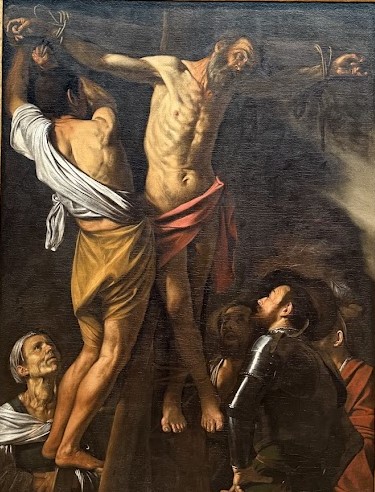
The Crucifixion of St. Andrew
Caravaggio’s “The Crucifixion of St. Andrew” stands out prominently among the works in the room at the Cleveland Museum of Art. Acquired by the museum in 1976, the painting had only recently been attributed to Caravaggio. After disappearing from historical records in 1653, it resurfaced centuries later in a convent in Spain and was published…
-

Martha and Mary
In keeping with the theme of Martha and Mary of Bethany, we take another look on Caravaggio’s amazing Martha and Mary Magdalene (1598). This piece is typically interpreted as the moment that Mary Magdalene turns away from her life of sin as a prostitute and embraces God as her sister Martha pleads with her. Today,…
-

Ecstasy of St. Francis
Giovanni Baglione’s “Ecstasy of St. Francis.” (1601). In this painting we see St. Francis reaching a state of ecstasy after deep meditation on Jesus’ cross and crown of thorns. Luckily for St. Francis, an angel catches him as he falls backward. Baglione portrays this moment in time with the expression of spiritual rapture on St. Francis’s…