Category: Location
-

Immaculate Conception
“Immaculate Conception” (1627) Guido Reni. The gallery label tells us that the Spanish Ambassador in Rome commissioned Reni to paint this for the Infanta of Spain (Infanta refers to the daughter of the king). Eventually the painting was hung in the cathedral of Seville and was extremely influential to Spanish painters, especially Murillo. We highlighted…
-

The Coronation of the Virgin
The Coronation of the Virgin (c.1595) Annibale Carracci. In this painting, the Virgin is depicted being crowned by the Holy Trinity. The Holy Spirit appears above her in the form of a dove, while God the Father and Christ the Son flank her on either side. Carracci’s composition reveals his deep admiration for Renaissance art:…
-

Saint John the Baptist Bearing Witness
Saint John the Baptist Bearing Witness (c.1600) Annibale Caracci. Here we see John the Baptist wearing his usual animal skin clothing and carrying a staff with the cross on top. The saint has turned toward us to direct our attention to a figure in the distance. At first glance, based on the clothing, pose and…
-

Two Children Teasing a Cat
Two Children Teasing a Cat (c.1587) Annibale Caracci. In this lively genre scene, Annibale Carracci captures a mischievous moment as two children play with a clearly irritated cat. A crayfish clamps onto the cat’s ear, adding to its distress, and it seems only a matter of time before the girl’s hand is met with claws.…
-
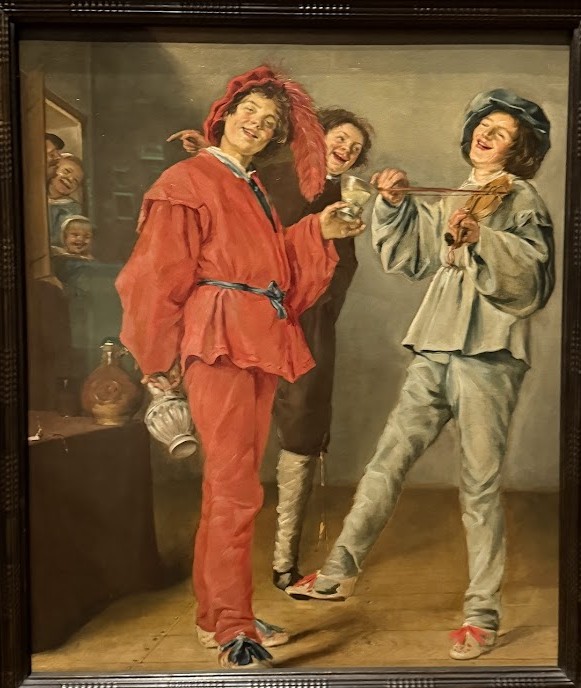
Merry Company
Merry Company (c.1629) Judith Leyster. While we’re currently focusing on Baroque art from Italy, Spain, and France, I always make a point to highlight the Dutch Golden Age painter Judith Leyster whenever I come across her work. She was one of the few well-known female painters of the Baroque period, and only a few paintings…
-

Christ on the Cross
Christ on the Cross (c.1615) by Cecco del Caravaggio (Francesco Buoneri) We recently visited the Met in New York City for the first time, where this powerful piece is on display. It’s housed in a glass case that allows you to view both sides, though I wasn’t able to capture a good photo due to…
-
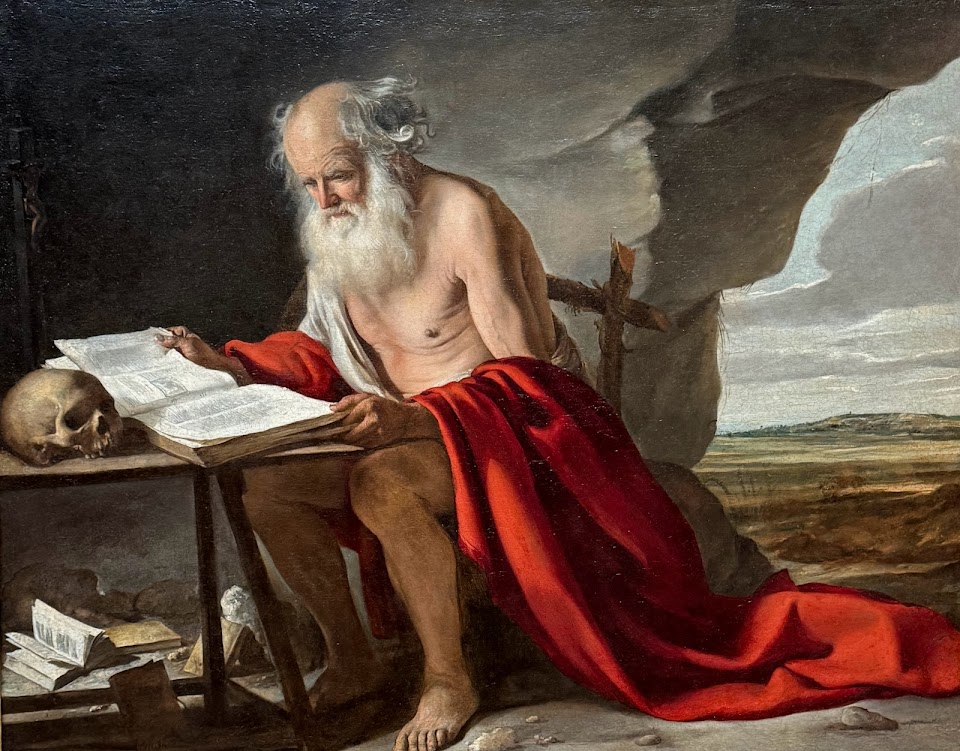
Feast of St. Jerome
St.Jerome (c.1642) LeNain Brothers. The Catholic church celebrates September 30th as the feast day of St. Jerome, priest and Doctor of the Church. St. Jerome was a 4th-century priest, theologian, and Doctor of the Church, best known for his translation of the Bible into Latin, known as the Vulgate. Born around 347 in Stridon (in…
-
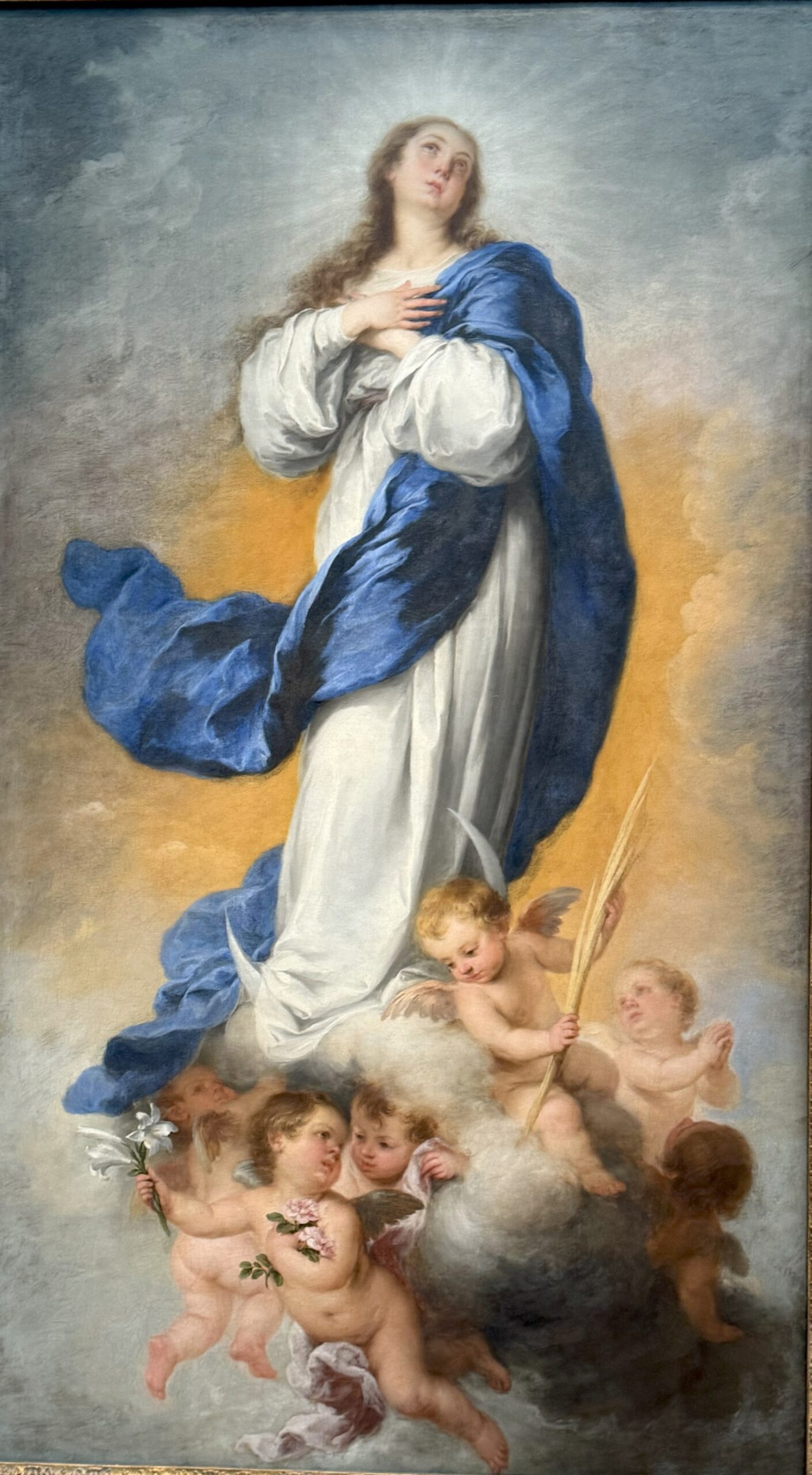
Immaculate Conception
“Immaculate Conception” (c.1680) Murillo skillfully combines symbols from both the Immaculate Conception and the Assumption to convey Mary’s purity and heavenly exaltation. Symbols of the Immaculate Conception include the crescent moon under her feet, referencing Revelation 12:1 and her triumph over sin; lilies, symbolizing her purity and perpetual virginity; and roses, representing her spiritual beauty…
-
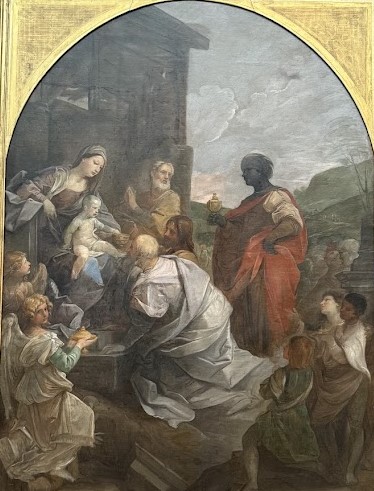
Adoration of the Magi
Adoration of the Magi (1642) by Guido Reni. The museum places this large altarpiece on the opposite wall from Caravaggio’s Crucifixion of St. Andrew. The Reni wall represents his version of idealism, where he draws from nature but enhances it to attempt to achieve an even more perfect representation of the subject. However, this was…
-
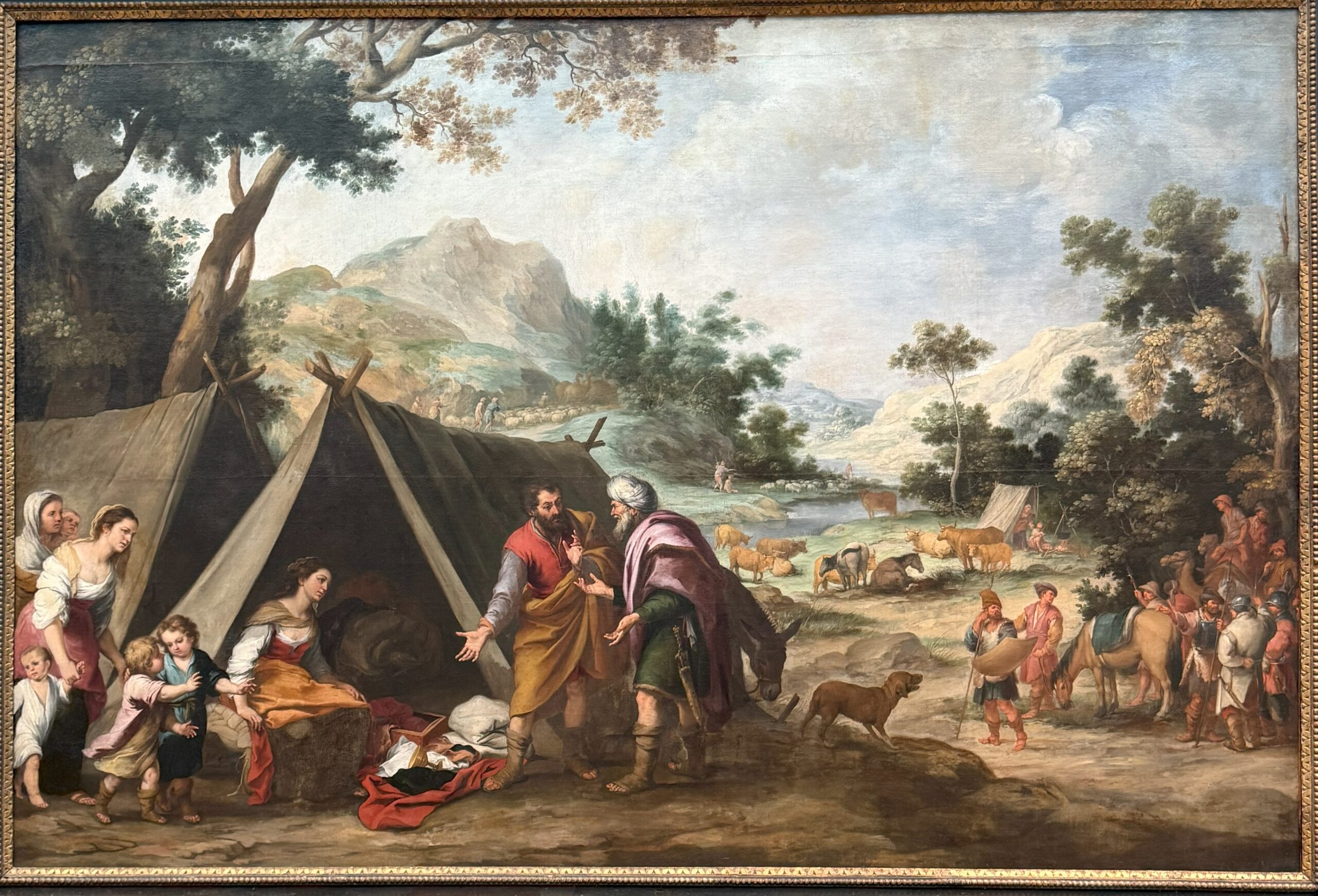
Laban Searching for his Stolen Household Gods
Laban Searching for his Stolen Household Gods (c.1665) Bartolomé Esteban Murillo. Murillo was commissioned with another painter to create 5 paintings depicting the life of Jacob from the Old Testament. The other painter was to paint the landscape and Murillo was to paint the foreground. However, there was a quarrel between the painters and Murillo…