Category: Location
-
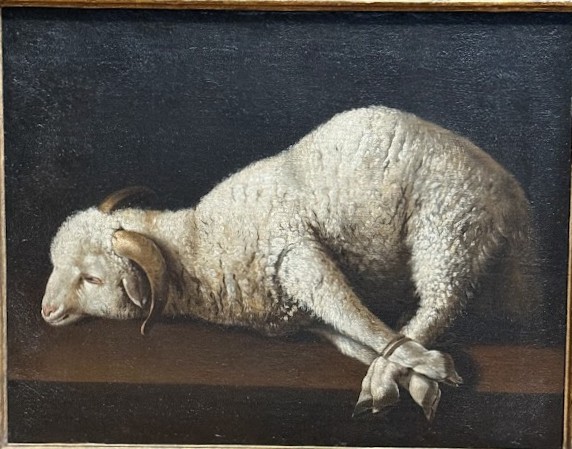
Lamb of God
Agnus Dei (c.1635) Francisco de Zurbarán. “Lamb of God” In a museum, among many other obviously devotional pieces, this one is easy to overlook or think that it might be out of place. But if you stop and reflect on it for a minute, it becomes extremely powerful. The innocent and helpless lamb, prepared for…
-
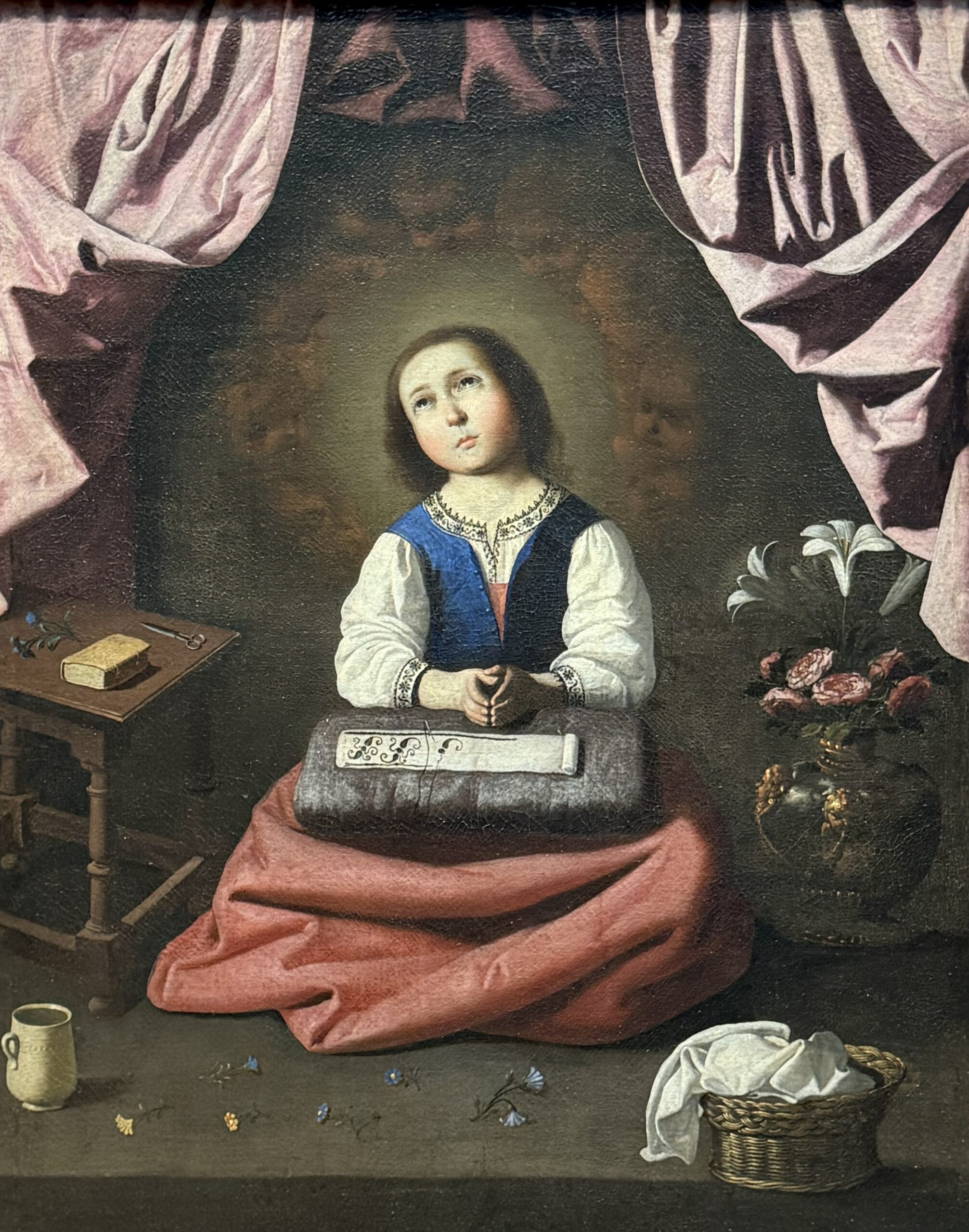
The Young Virgin
The Young Virgin (c.1632) Francisco de Zurbarán. There is so much going on in this painting, I notice something new every time I look at it. First to catch your eye of course is a very young and devout Virgin Mary, reverently turning her eyes up toward heaven. You might notice the light on her…
-
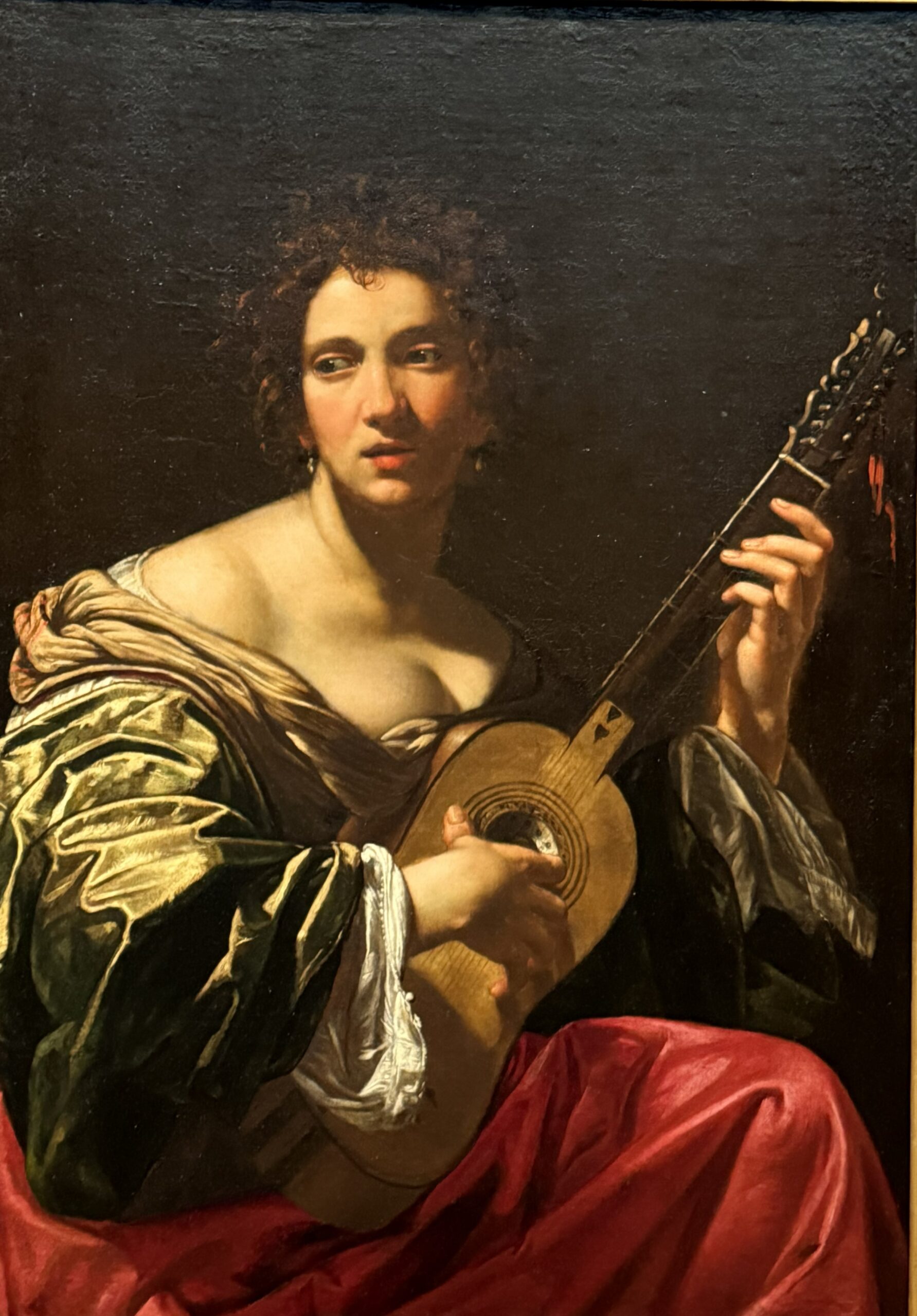
Woman Playing a Guitar
Woman Playing a Guitar (1618) Simon Vouet. This was painted while Simon was in Rome and exploring Caravaggism. The dramatic lighting, darkcolor palette and extreme naturalism are traits of the followers of Caravaggio immediately after his death in 1610. Who is the woman playing the guitar? Perhaps Artemisia Gentileschi or Vouet’s wife Virginia da Vezzo?…
-
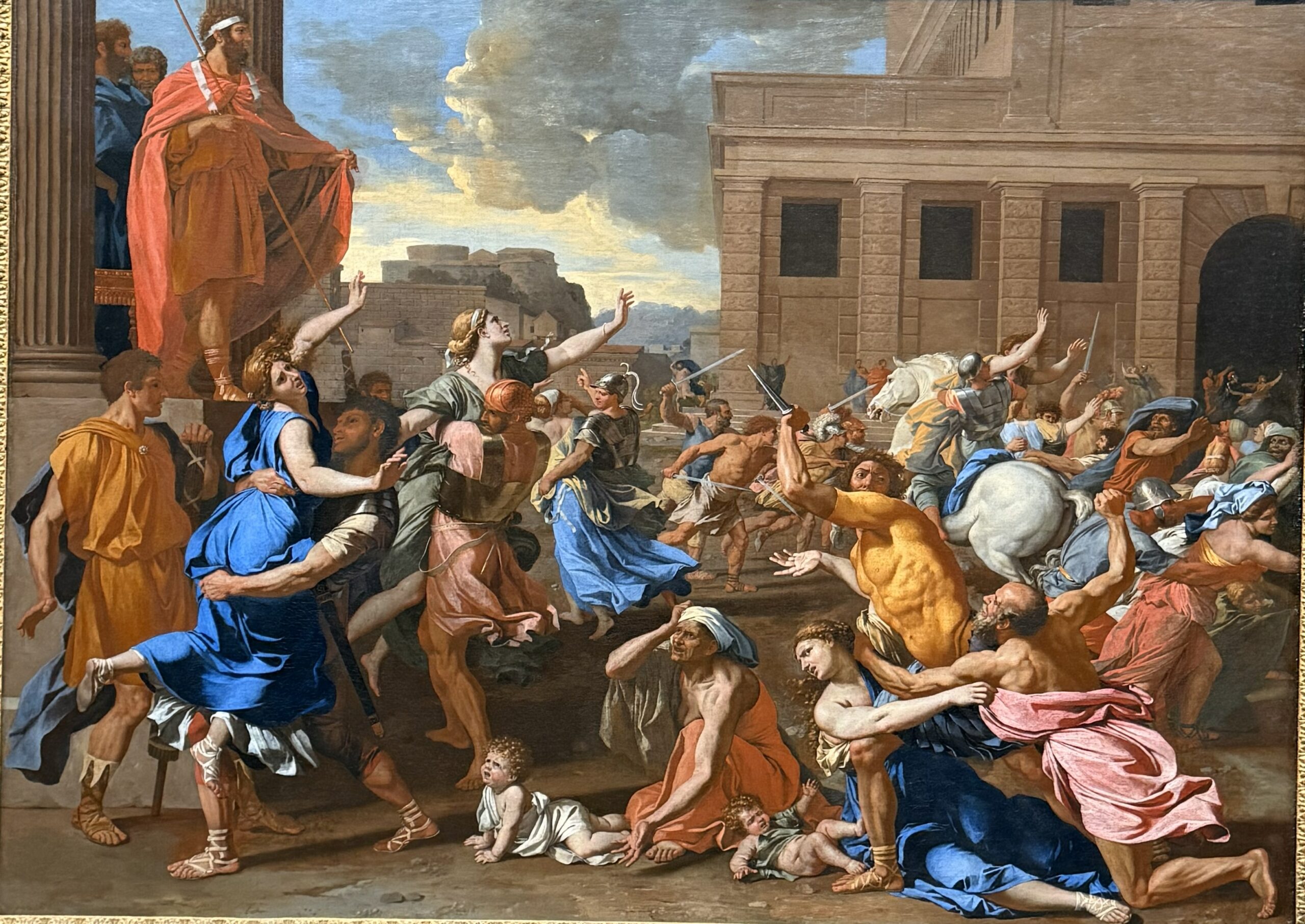
Abduction of the Sabine Women
The Abduction of the Sabine Women (c1633) Nicolas Poussin. This painting is considered foundational for the French Classical style (I like to call French Baroque to keep it simple). Poussin spent most of his career in Rome and was in love with antiquity, that is, that ancient world of Greece and Rome, their statues, columns…
-
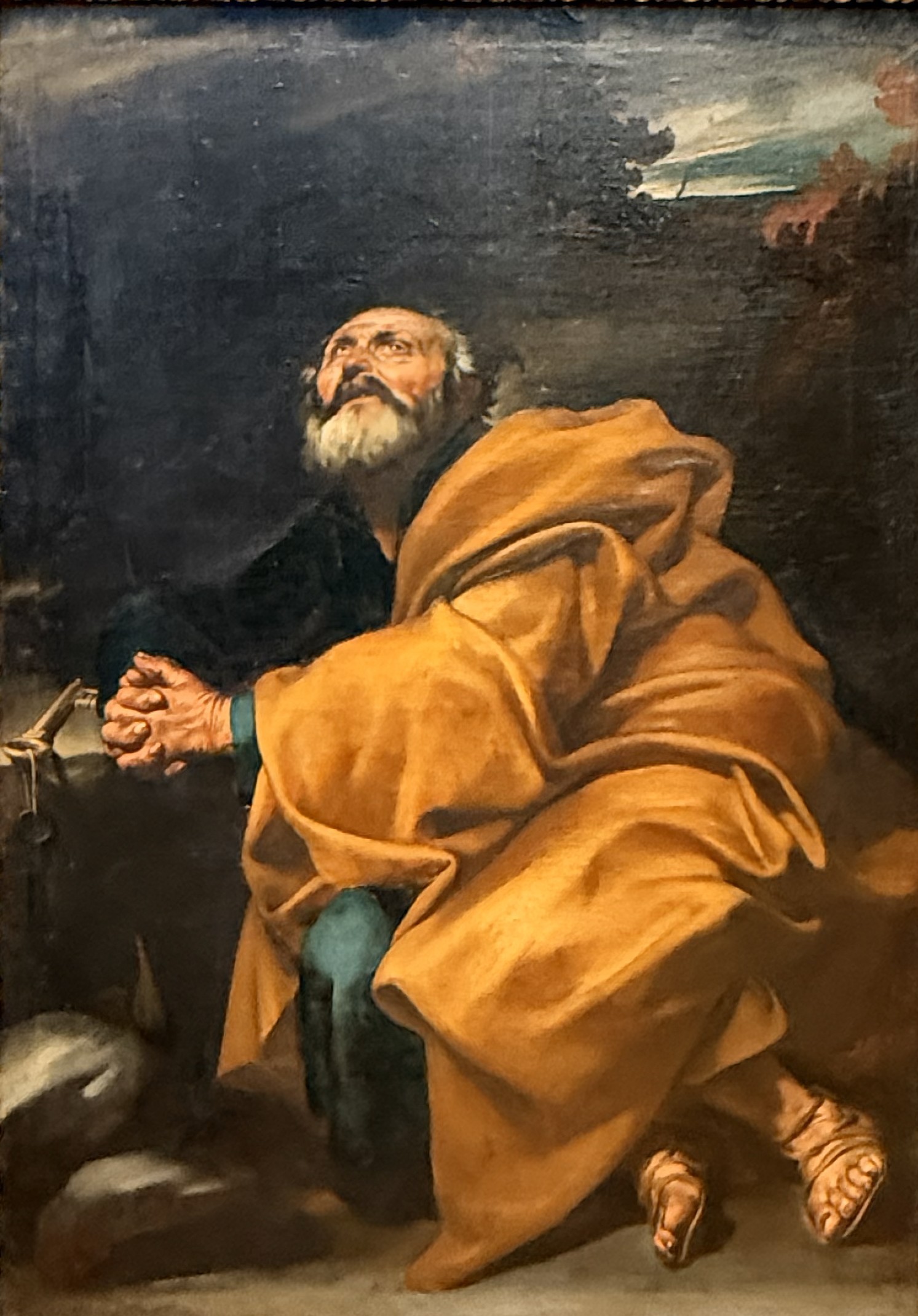
The Tears of Saint Peter
The Tears of Saint Peter (c1613) Jusepe de Ribera. Here is another treatment of the popular Counter-Reformation doctrine that penitence is a true sacrament and not simply a spiritual attitude as the Protestants argued. Emotion such as weeping is interpreted as repentance and this type of painting encouraged the viewer to reflect deeply on their…
-
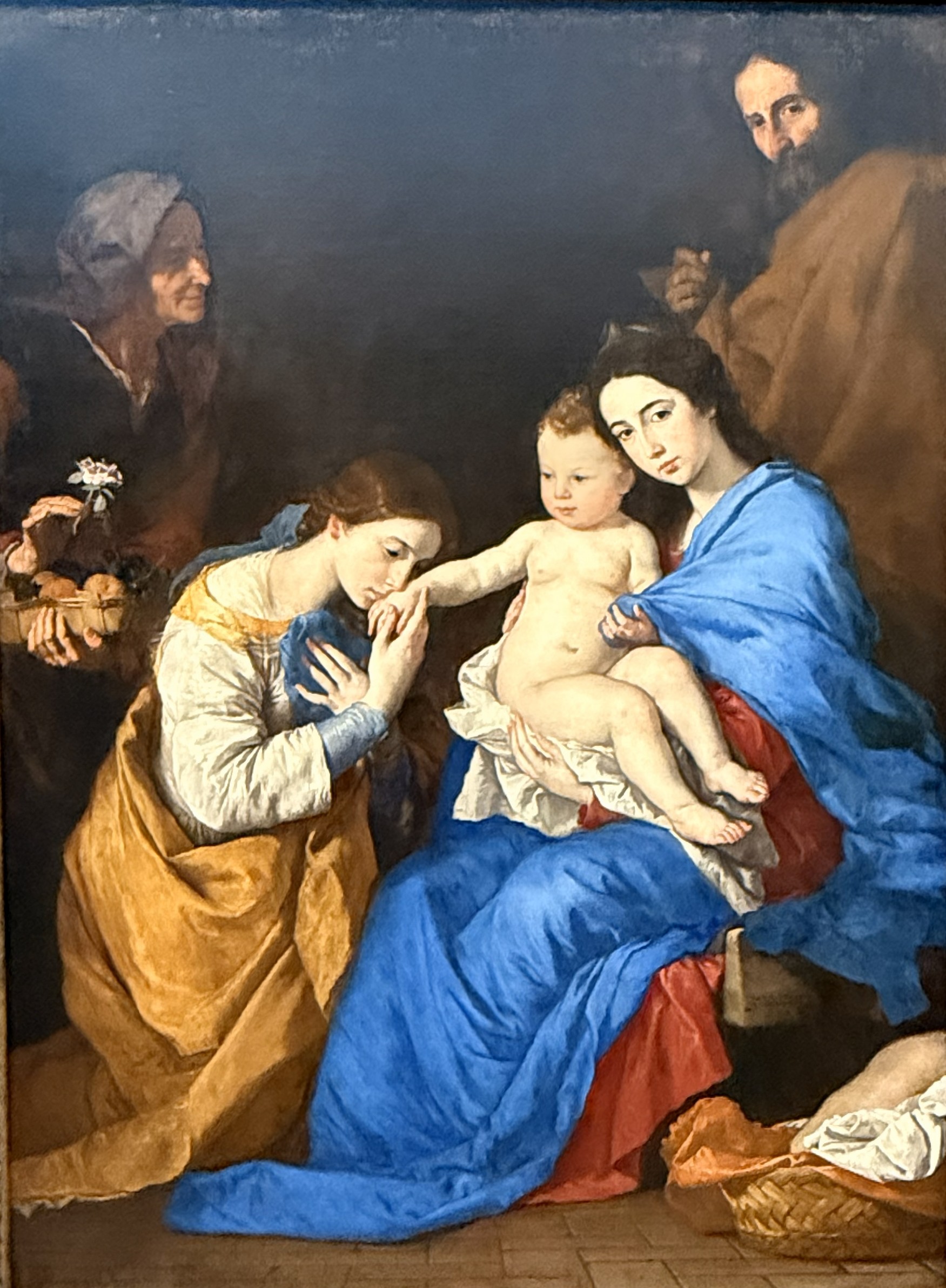
The Holy Family with Saints Anne and Catherine of Alexandria
The Holy Family with Saints Anne and Catherine of Alexandria (1648) Jusepe de Ribera. Ribera combines the influence of Caravaggio and Reni in this beautiful depiction of the Holy Family with visitors.
-
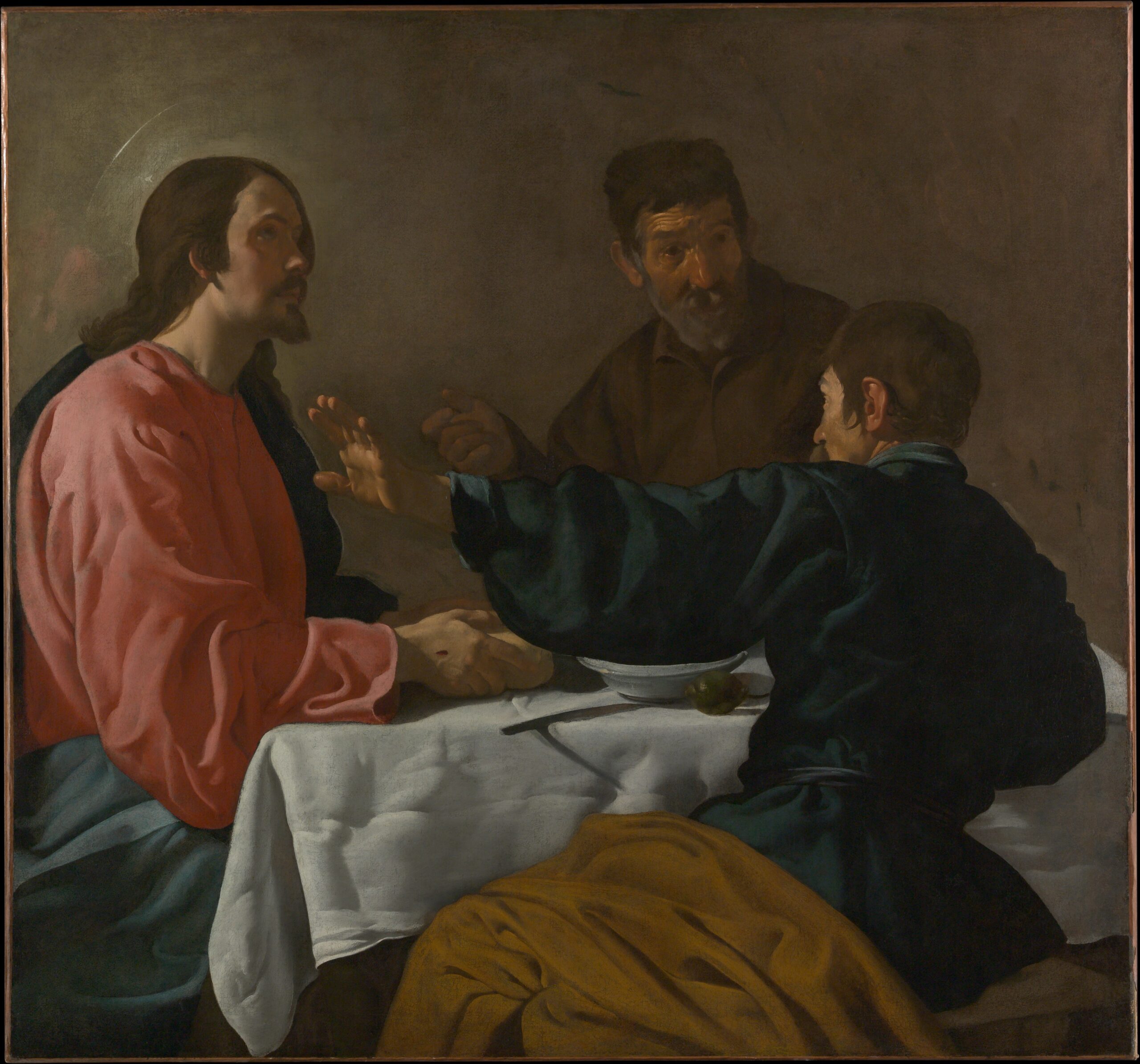
Supper at Emmaus
The Supper at Emmaus (c.1622) Velázquez. Velázquez was in his early 20s when he painted his interpretation of two men encountering the risen Christ. The overall tone of the painting is much more restrained when compared with Caravaggio’s version of the same subject. The gesturing man has his back completed turned away from us; we…
-
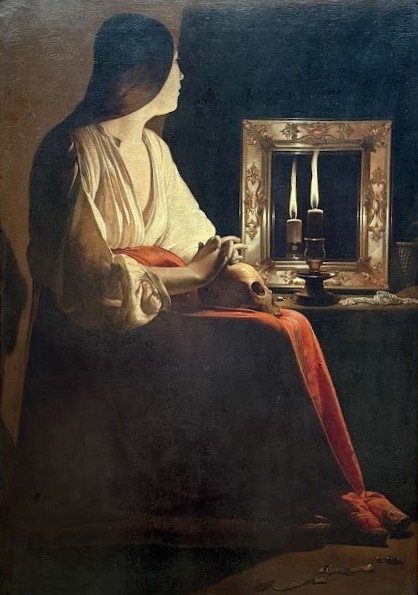
Penitent Magdalen
The Penitent Magdalen (c.1640) Georges de La Tour. La Tour’s Penitent Magdalen offers a quieter, more meditative vision of repentance. Stripped of excess, the scene centers on contemplation, marked by familiar symbols: the mirror of vanity, the skull of mortality, and abandoned jewelry – pleasure exchanged for piety. The Met notes this is one of…
-
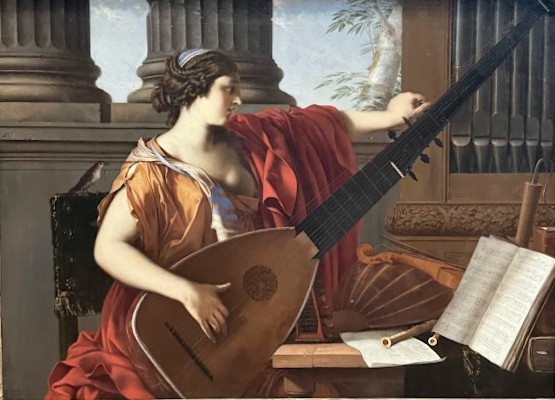
Allegory of Music
Allegory of Music (1649) Laurent de La Hyre. La Hyre was a highly influential Parisian artist and one of the founding members of the Royal Academy of Painting and Sculpture, a state sponsored academy that had full control over that was deemed “Good Art” from the Mid-17th century until the early 19th century. This is…
-
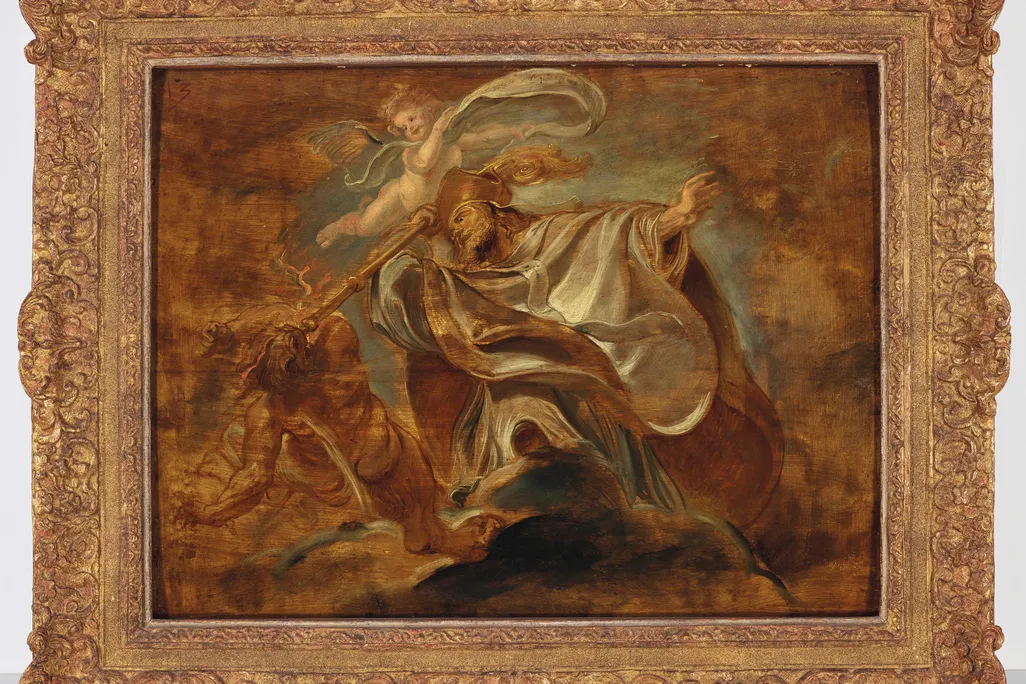
Saint Gregory of Nazianzus
Saint Gregory of Nazianzus (1621) Rubens. January 2nd is the feast day of St. Basil the Great and St. Gregory of Nazianzus. St. Gregory presided over the 2nd ecumenical council, which produced the Nicene Creed that is still said at Roman Catholic mass each Sunday. (with minor modifications – visible or invisible / seen or…