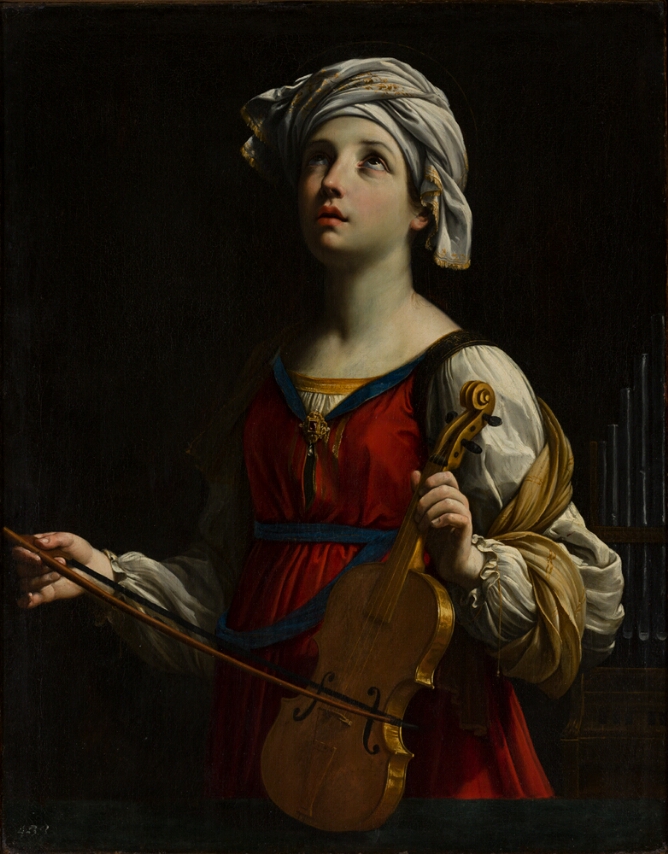
St. Cecilia (1606), Guido Reni. November 22nd is the feast day St. Cecilia, Virgin and Martyr.
According to early Church tradition, St. Cecilia was born to wealthy pagan parents in Rome in the 3rd century. She dedicated her life to Christ and to serving the poor, fully aware that her faith could cost her her life. When soldiers attempted to kill her by scalding her in the steam bath of her home and failed, they tried to behead her. Their attempt left her with a deep wound in her neck, and though she survived for three days in great pain, she used that time to encourage and convert others. Pope Urban visited her, gave her Last Rites, and she died soon after.
A church was later built over the site of her home in the Trastevere neighborhood of Rome, and her body was moved into a tomb in the church in the 9th century. During renovations in 1599, her tomb was opened and her body was found incorrupt, i.e. not decomposed. A sculptor created a life-sized depiction of her body, including the wound on her neck, before the tomb was resealed.
News of her incorrupt body spread quickly, and St. Cecilia became a favorite subject for Baroque painters. Guido Reni depicted her at least four times. Earlier images of Cecilia usually show her with pipes or a harp, but during the Baroque period she appears with a variety of instruments—like the violin she holds here. Reni includes pipes in the background, a nod both to traditional iconography and to the steam pipes connected with her attempted martyrdom.
Leave a Reply