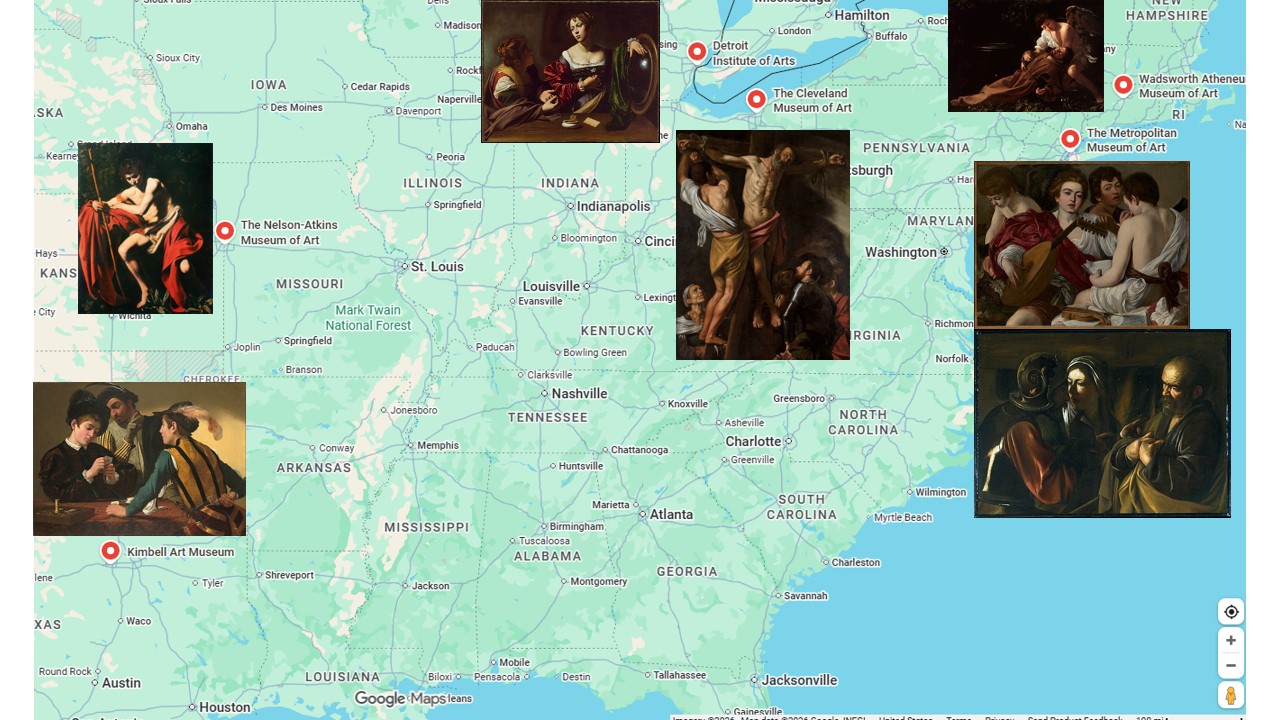
In the US, we are lucky to have 6 museums host undisputed Caravaggio masterpieces that are normally on display. These pieces do tend to travel frequently, with the exception of the Crucifixion of St. Andrew in Cleveland. It is important that you check our Caravaggio database as well as the museum website before planning to visit one of the museums.
In addition to the permanent masterpieces, there are often special exhibits that are held at various museums across the country that feature Caravaggio’s from across the Atlantic. Check this website often for information about these special exhibits.
Detroit Institute of Arts
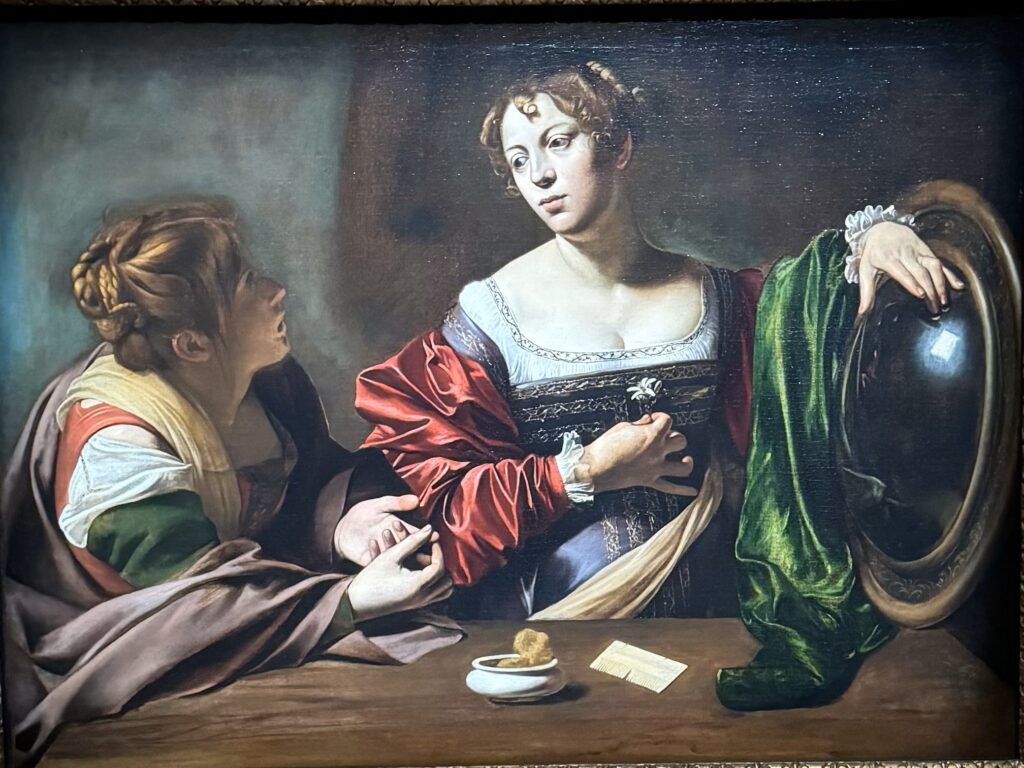
This painting was not recognized an autograph (meaning actually painted by) Caravaggio until the late 1960s. It was purchased by the Detroit Institute of Arts in 1973.
This piece is typically interpreted as the moment that Mary Magdalene turns away from her life of sin as a prostitute and embraces God as her sister Martha pleads with her. Today, we know that Mary of Bethany is a different person than Mary Magdalene and that Bible says nothing about Mary Magdalene actually being a prostitute. However, back in Caravaggio’s day, Mary Magdalene was a main figure in the Counter-Reformation efforts, known as the prostitute turned saint whose sister Martha helped put her on the path to God. Baroque art is full of paintings of Mary Magdalene in various states of dress and ecstasy that we will continue to explore.
This stunning Caravaggio is part of the Detroit Institute of Art’s European Collection.
Cleveland Museum of Art
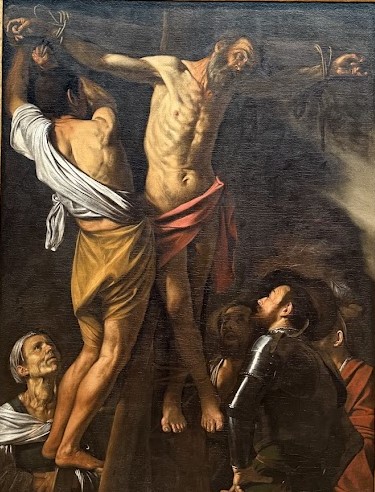
Acquired by the Cleveland Museum of Art in 1976, the painting also has only recently been attributed to Caravaggio. After disappearing from historical records in 1653, it resurfaced centuries later in a convent in Spain and was published as an autograph work in 1972. How or when it arrived at the convent remains a mystery.
Find out much more about the painting and the Cleveland Museum of Art in our Baroque Art focused Itinerary.
Wadsworth Atheneum Museum of Art
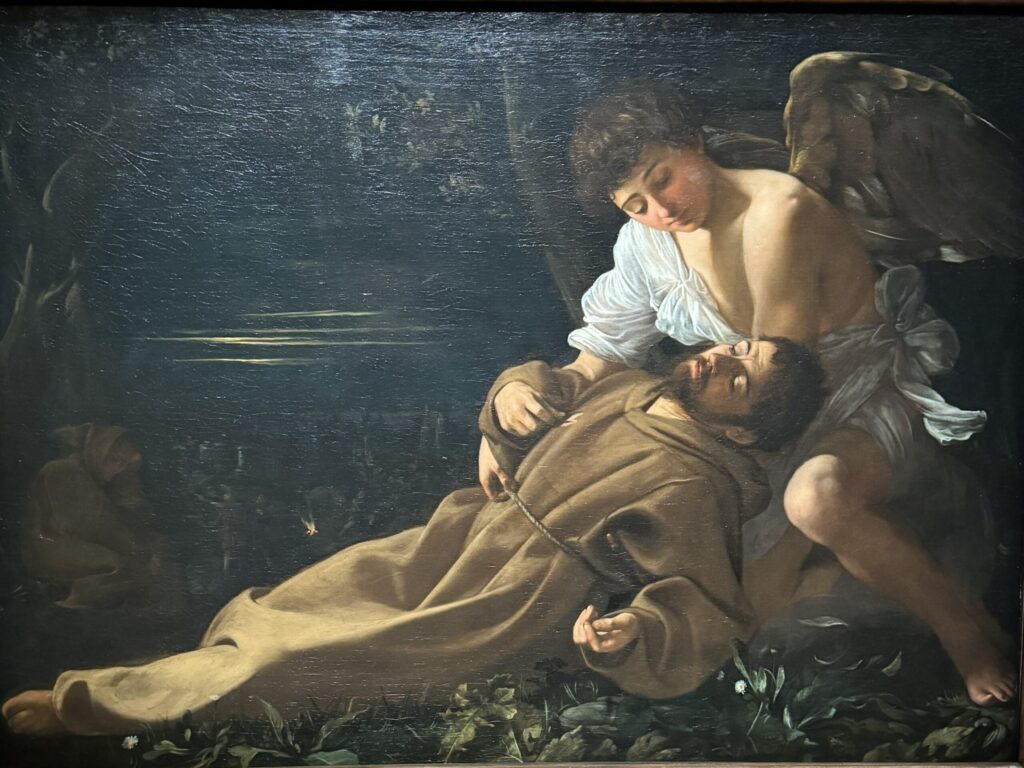
Since 1943, this painting has been housed at the Wadsworth in Hartford, Connecticut, and unlike the Caravaggio works in Detroit and Cleveland, it has long been recognized as an autograph Caravaggio; the first to be permanently housed in a public collection the United States. We had the chance to see it in person during the excellent “The Brilliance of Caravaggio” Exhibit at the Toledo Musuem of Art in 2024. This exhibit brought together four of the American hosted Caravaggio paintings from Texas, Detroit, Connecticut and New York.
This painting was Caravaggio’s first religious painting and its modest size suggests that was painted for private meditation as opposed to being placed in a church. We do not know who commissioned the work (if anyone) but we do know that by 1606 Ottavio Costa had purchased it. It would be the first of three Caravaggio’s that Costa would acquire.
The painting depicts the moment that St. Francis receives the Stigmata; that is the wounds of Christ on his hands, feet and chest. Currently the only visible wound is on his side, beneath his arm. St. Francis is being tenderly held by a consoling angel. If you are wondering where in Franciscan texts does it say that St. Francis was held by angel in his moment of ecstasy, it does not. However, Caravaggio has modeled this scene of Christ’s agony in the Garden of Gethsemane where Luke(22:43) mentions an angel consoling Jesus. This helps us understand that Caravaggio wants us to reflect on the idea that St. Francis felt the complete Jesus experience, from his agony in the garden to his crucifixion and resurrection.
The Metropolitan Museum of Art
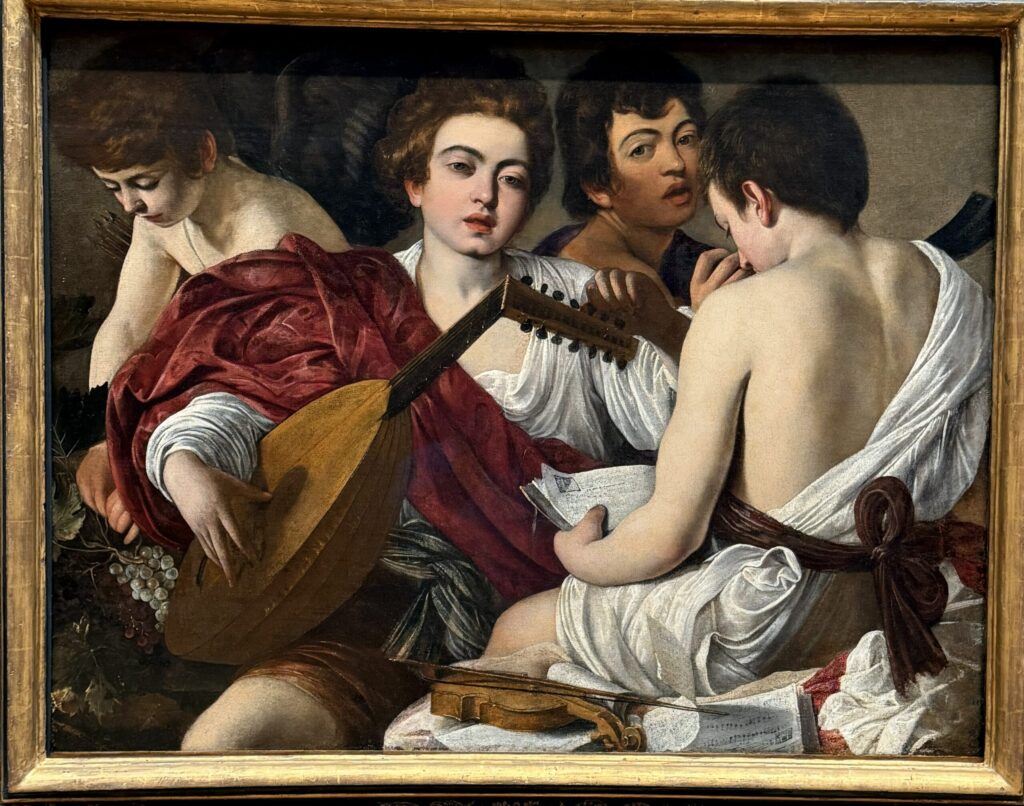
Thanks to early Caravaggio biographers (Belori & Baglione) we know that this was painted for Cardinel Del Monte when Caravaggio was living with him in the late 16th century. Many, Many sales later, the painting made its way to the Met in 1952.
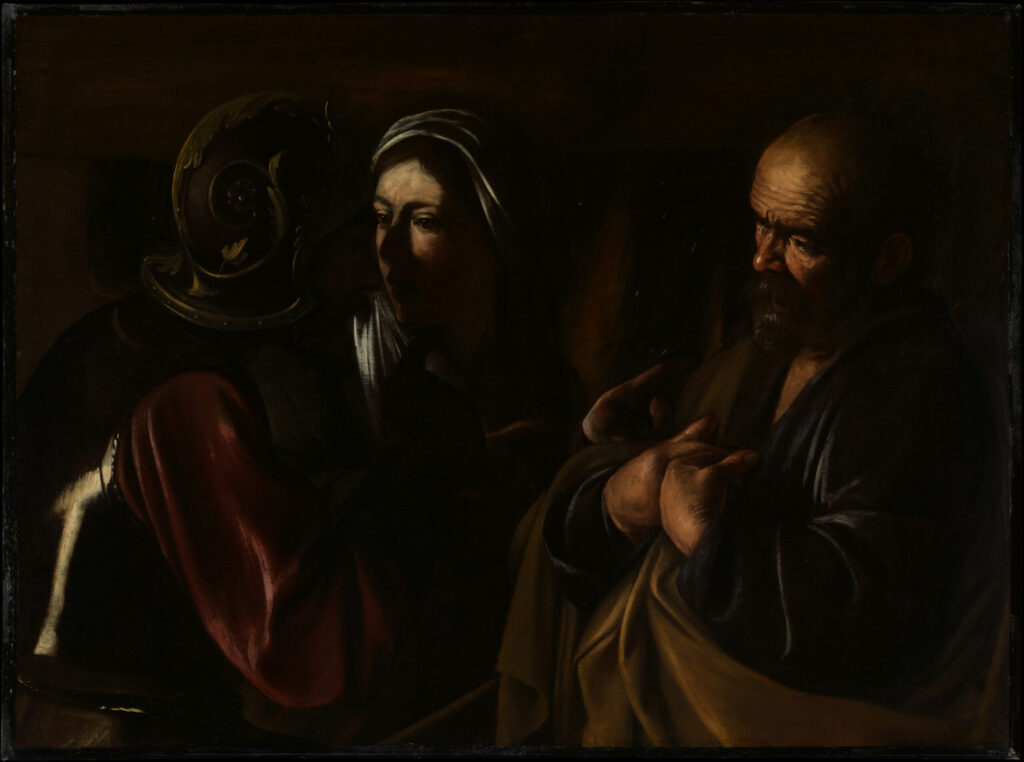
This was painted towards the end of Caravaggio’s short life. It turns out that it was in the possession of none other than Northern Italian Baroque Here, Guido Reni as payment for a debt and then several hundred years later, in 1997 the Met purchased it.
Find out much more about the painting and the Metropolitan Museum of Art in our Baroque Art focused Itinerary.
Nelson-Atkins Museum of Art
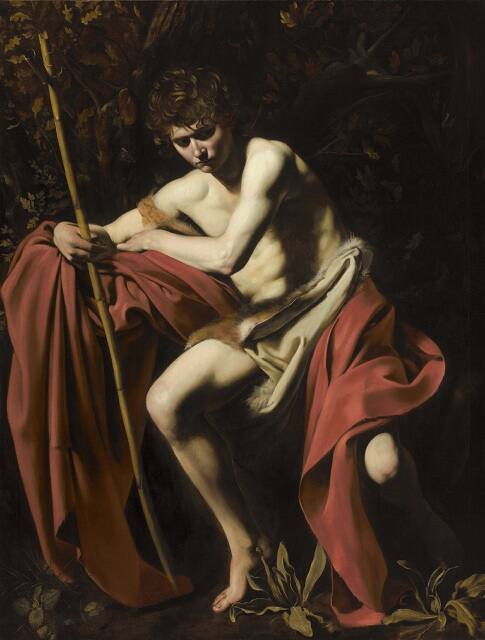
This masterpiece was commissioned by Ottavio Costa in 1602 and was purchased by the Nelson-Atkins Museum of Fine Art in 1952.
Caravaggio abandons idealized imagery in favor of a raw realism that was controversial in his time, stripping the saint of traditional symbols to focus on his intense, inward emotion. Dramatic contrasts of light and shadow, a vivid red cloak, and the figure’s close placement to the viewer heighten the painting’s emotional power. Marks incised into the gesso reveal Caravaggio’s working process, and the pose likely reflects his study of Michelangelo’s figures on the Sistine Chapel ceiling.
Kimball Museum of Art
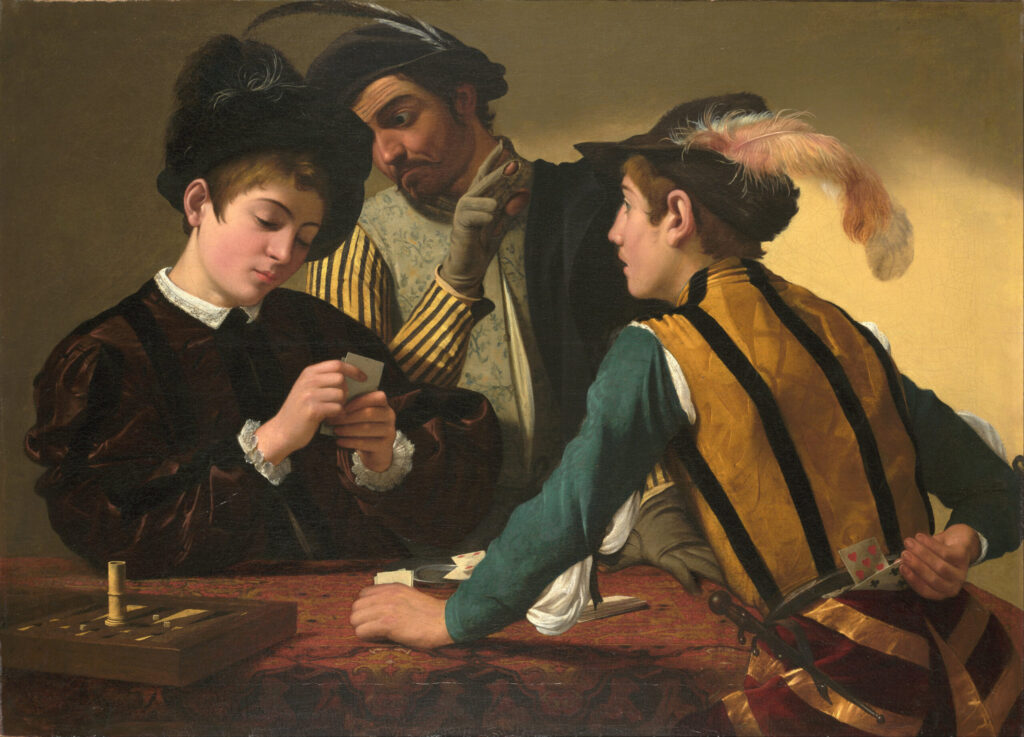
Bellori, one of Caravaggio’s 17th century biographers, tells us that this painting is the one that caught Cardinal Del Monte’s eye and changed Caravaggio’s life. Del Monte gave Caravaggio a place to stay and connected him with many wealthy patrons. The Kimball Fine Art Museum purchased this masterpiece in 1987.
In the Cardsharps, the players are caught up in a game of primero, an early version of poker. On the left, the unsuspecting victim studies his hand, unaware that the older cheat is signaling his partner with a raised gloved hand; its fingertips cut away so he can feel marked cards. On the right, the younger cheat watches the boy closely while sneaking a hidden card from the back of his trousers. Rather than turning the scene into a moral cartoon about vice, Caravaggio treats it like a short story, using glances and gestures to quietly build a sense of tension, trickery, and lost innocence.
Leave a Reply