Author: Brian
-
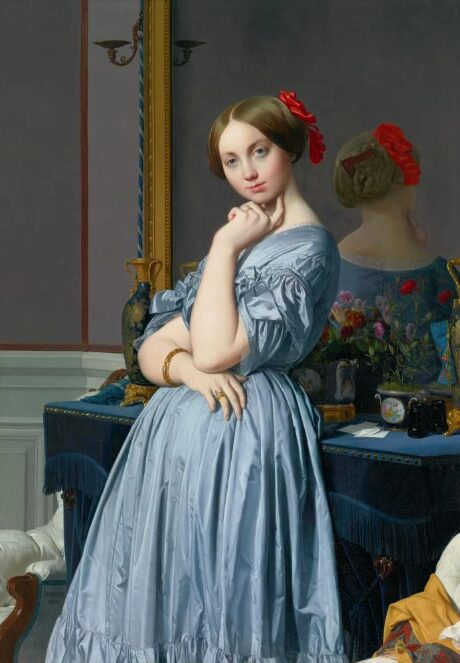
Ingres’ Louise at the Frick Collection
Louise, Princesse de Broglie, Jean‑Auguste‑Dominique Ingres (c.1851–1853). This portrait isn’t Baroque; it’s Neoclassical, polished, and impossibly refined. But look closely and you can feel the Baroque echo: the luxurious fabrics, the glowing skin tones, the quiet drama of her gaze. Sometimes the best way to grasp what Baroque art truly is by seeing how later…
-
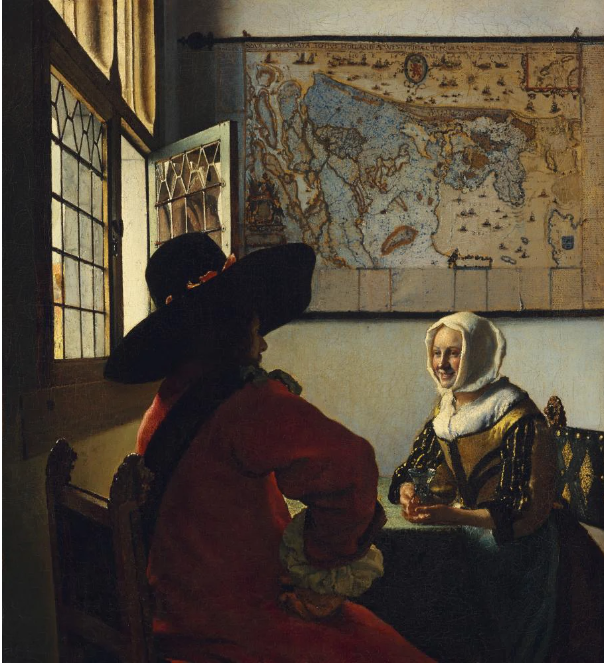
Vermeer’s Officer and Laughing Girl
Officer and Laughing Girl, Johannes Vermeer (c.1657) This Frick favorite shows how Vermeer takes the drama of Baroque lighting and transforms it into something tender. The officer looms in shadow while the young woman glows with laughter. It is a perfect study in contrast, mood, and Vermeer’s gift for turning everyday life into something cinematic.
-

Fragonard’s Progress of Love at the Frick Collection
The Progress of Love: Love Letters, Jean‑Honoré Fragonard (c.1771–1772)Fragonard’s world is all soft color, flirtation, and decorative fantasy; a far cry from the emotional weight and spiritual urgency of Baroque art. In fact, looking at Rococo works like this is one of the easiest ways to understand Baroque: by seeing what it isn’t.
-

Vermeer’s Mistress and Maid at the Frick Collection
Mistress and Maid, Johannes Vermeer (c.1666–1667) At the Frick Collection, this luminous scene captures Vermeer’s gift for turning a quiet moment into a world of emotion. The mistress pauses over a letter while her maid leans in, the soft light revealing a story we’re invited to imagine but never fully know. A masterpiece of stillness,…
-

King Phillip IV of Spain
King Philip IV of Spain, Diego Velázquez (c.1644) At The Frick Collection, this commanding portrait shows Velázquez at the height of his power. With his unmatched eye for naturalism and royal psychology, he captures Philip IV not as an icon, but as a living, breathing monarch; poised, restrained, and unmistakably human.
-

Murillo’s Self-Portrait at the Frick Collection
Bartolomé Esteban Murillo’s self‑portrait (c. 1670–1675), at The Frick Collection, captures the quiet confidence of one of Spain’s greatest Golden Age painters. Known for his radiant religious works and tender depictions of Seville’s street children, Murillo was also a master of portraiture; a part of his legacy that remains surprisingly understudied. A timeless window into…
-

Girl Interrupted at Her Music
“Girl Interrupted at Her Music” Johannes Vermeer (c.1658). On Display at the Frick Collection in NYC. Vermeer was underappreciated during his lifetime, but if it’s any consolation his ~35ish paintings are now some of the most well studied and sought after paintings in the world. In the US, we only have 3 museums with permanent…
-

The Resurrection
“The Resurrection” (c. 1619-1620) by Francesco Buoneri aka Cecco del Caravaggio was commissioned for a family chapel in Florence. The painting was rejected by the family and then acquired by Cardinal Scipione Borghese. The painting depicts the moment that Christ rises from the tomb. You can see the angel has moved the stone from the…
-
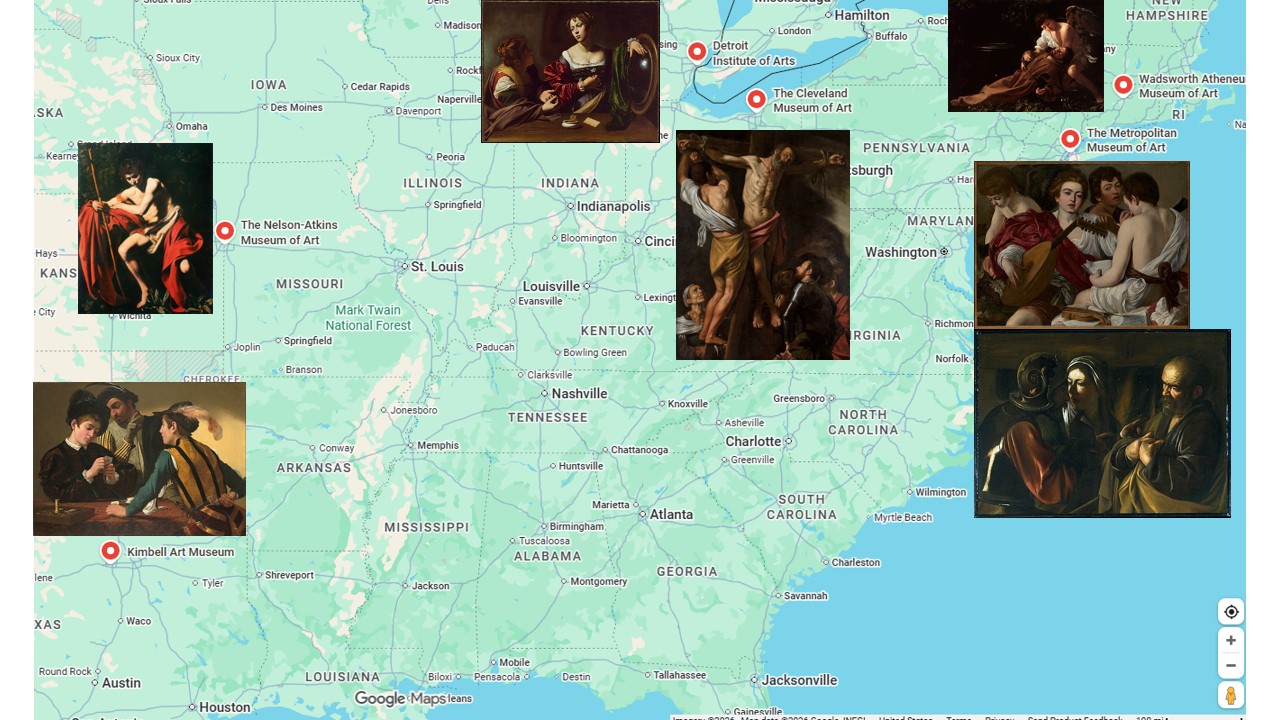
Caravaggio in America
In the US, we are lucky to have 6 museums host undisputed Caravaggio masterpieces that are normally on display. These pieces do tend to travel frequently, with the exception of the Crucifixion of St. Andrew in Cleveland. It is important that you check our Caravaggio database as well as the museum website before planning to…