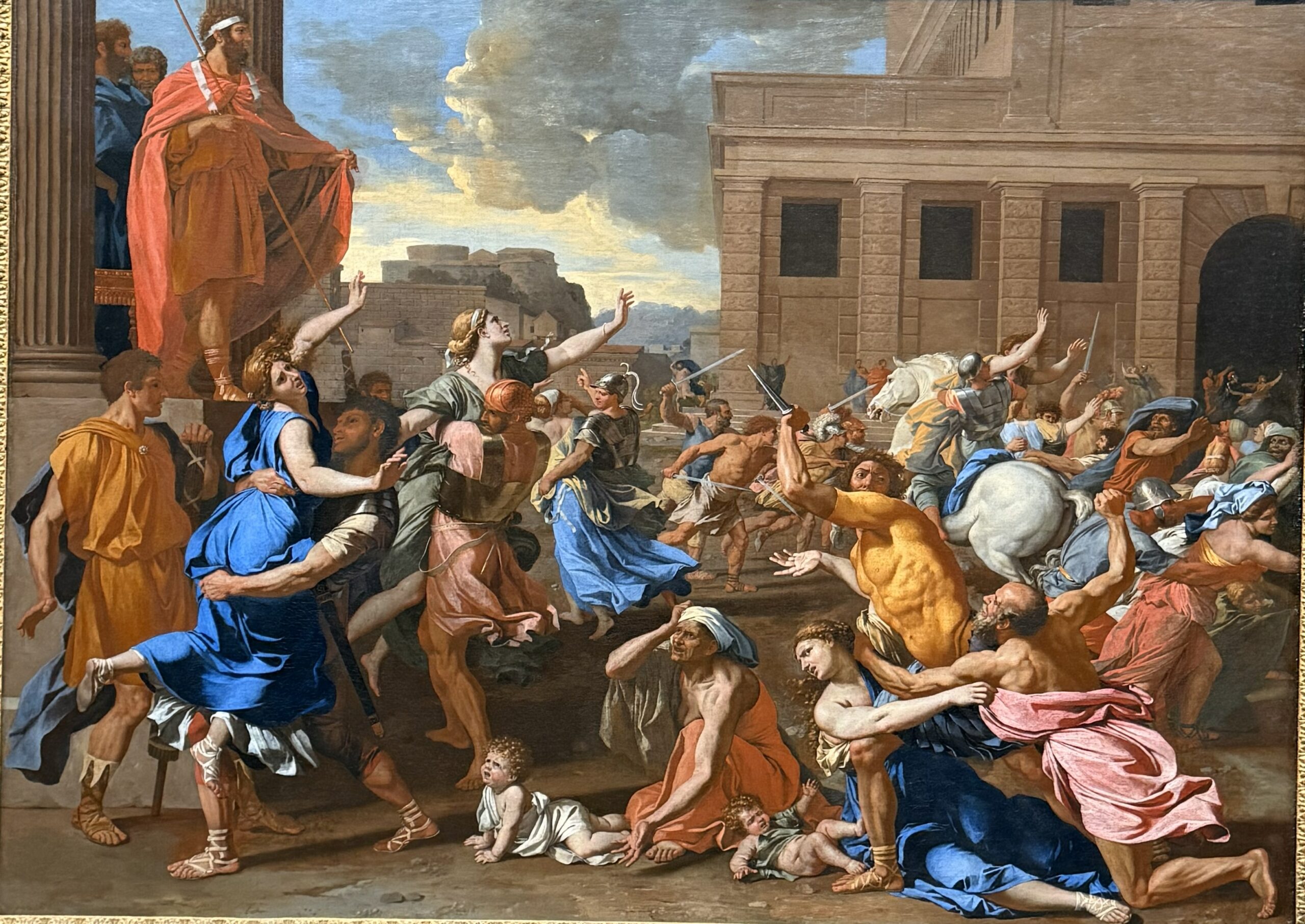
The Abduction of the Sabine Women (c1633) Nicolas Poussin. This painting is considered foundational for the French Classical style (I like to call French Baroque to keep it simple). Poussin spent most of his career in Rome and was in love with antiquity, that is, that ancient world of Greece and Rome, their statues, columns and ideas. His love is evident in this painting where many of the figures are posed after famous Roman statues as well the columns and buildings in the background.
The Abduction of the Sabine Women is a myth from the time of the founding of Rome. The myth is recorded by several authors (Plutarch, Livy and Virgil), with varying details, but the central gist of the story is that Romulus wanted to grow the population of Rome by inviting the women of neighboring tribes to marry the men of Rome. The tribes declined, so Romulus devised a ruse where he started a rumor that he had found a secret altar to Neptune and planned to make a sacrifice at the altar and have games and festivities afterward. People came from the surrounding tribes including the Sabines. When Romulus opened/closed his robe as shown in the painting, that was the signal for the men of Rome to take a Sabine maiden of their choice. The Sabine men did not fight back at that time, but later attacked the Romans in order to reclaim their daughters. However, the daughters ran to the battlefield to intervene and stop the bloodshed, they agreed to stay with their Roman husbands.
Another point of interest is the title of the painting. The incident has been referred to as “Sabine raptae” since the renaissance and the literal meaning is “Abduction of Sabine Women.” However, when referring to abduction of women, sexual assault is often implied. Therefore, many feel it is more accurate to call it “The Rape of the Sabine Women.” You will see the terms used interchangeably for many stories from antiquity such as “The Abduction of Daphne.”
For more detail check out this blog -> What Truly Happened to the Sabine Women.
Leave a Reply