Most famous paintings earn their reputation through great battles, royal ceremonies, or dramatic religious scenes. The curious images of Gabrielle d’Estrées did something far more remarkable.
They became famous because nobody is entirely sure what they mean.
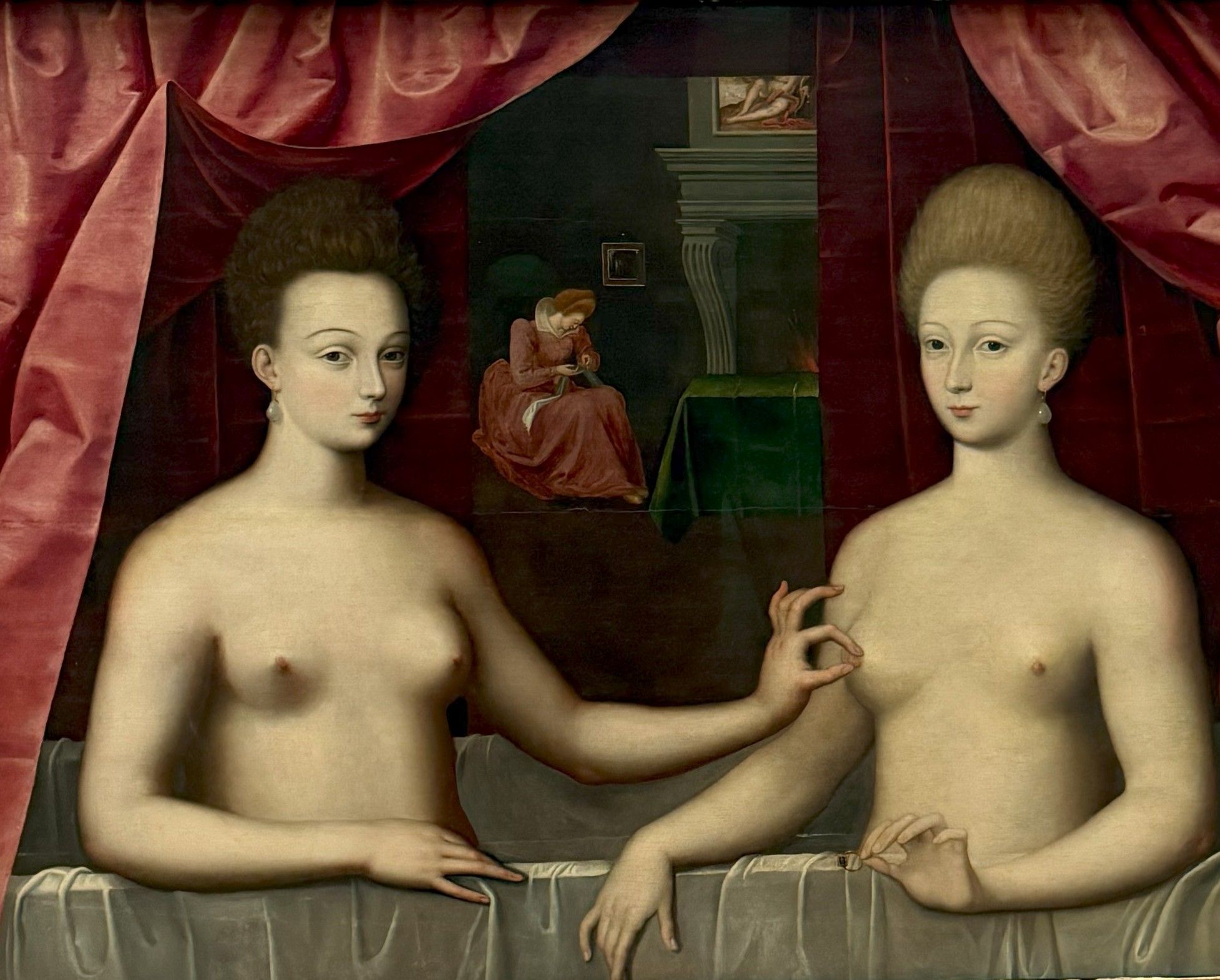
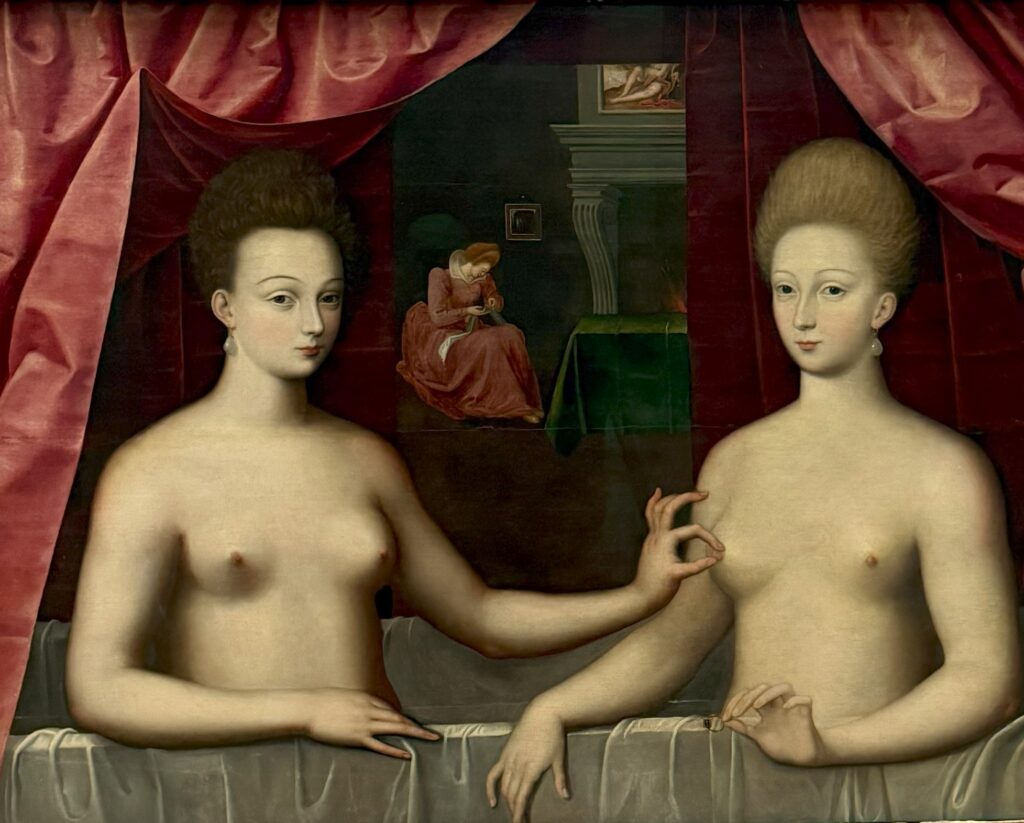
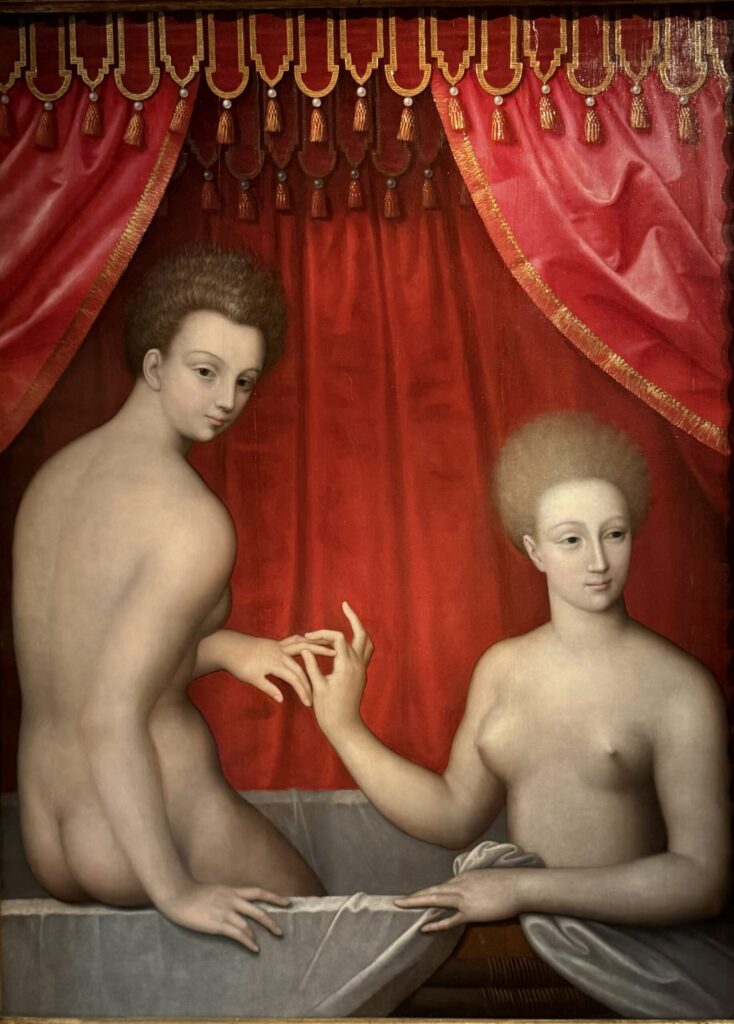
In Paris, the Louvre displays the celebrated Gabrielle d’Estrées and One of Her Sisters. In Florence, the Uffizi preserves a closely related version painted around the same time by artists of the School of Fontainebleau. At first glance the paintings seem simple: two aristocratic women sit together in a bath, frozen in a strangely intimate moment.
Yet every detail feels coded.
The women stare calmly outward, as though the viewer already understands the message. A ring appears. A figure sews in the background. A hand performs a gesture that has launched centuries of speculation. Historians generally believe the Louvre scene refers to Gabrielle d’Estrées, the powerful mistress of King Henry IV, and to the birth of their son. The Uffizi scene replaces Gabrielle with Henry’s newer mistress Henriette d’Entragues. Others have proposed rival identities and rival meanings.
What makes the Louvre and Uffizi versions so compelling is that they live halfway between portrait and puzzle.
The paintings emerged from the sophisticated artistic world of Fontainebleau, where elegance, symbolism, and courtly intrigue often mingled. To a modern audience they look mysterious. To a courtier of 1595 they may have read like a headline.
Four centuries later, the gossip has faded, the court has vanished, and the codes are only partly understood. Yet the paintings continue to do exactly what great art does best: they invite every generation into the conversation without ever fully revealing the answer.
Perhaps that is why the women in the bath still hold our attention. They seem to know something we do not. And they are in no hurry to explain it.
Leave a Reply